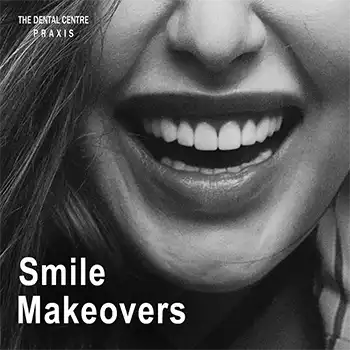
The Problem DSD Solves: No More Guessing What Your New Smile Will Look Like
For decades, cosmetic dentistry involved a significant leap of faith. A patient would describe their dream smile — "whiter," "more even," "less gummy" — the dentist would listen, nod, and begin preparing teeth. The patient would receive temporary restorations, then permanent ones, and only at the final delivery appointment would they see the actual result. If something was not quite right — the length, the shape, the width, the shade — remedying it at that stage was expensive, time-consuming, and sometimes impossible.
Digital Smile Design (DSD) was created to solve this problem. Developed by Brazilian cosmetic dentist Dr Christian Coachman in 2007 and now used by leading aesthetic practices worldwide, DSD is a digital planning and communication protocol that allows a patient to see, evaluate, and approve their proposed new smile — mapped precisely to their face — before any clinical procedure begins.
At PRAXIS Dental in Andheri West, Mumbai, Dr Varun Malhotra and Dr Rupali Shah Malhotra use DSD as the foundation of every cosmetic case — from a single veneer to a full smile makeover to complete mouth rehabilitation. It is not a marketing tool. It is the clinically responsible way to plan and deliver cosmetic dentistry.
"DSD changes the entire dynamic between dentist and patient. Instead of me saying 'trust me, it will look beautiful,' I can show the patient exactly what their result will look like on their face. We refine it together until both of us are completely satisfied — and then, and only then, do we begin treatment."
— Dr Varun Malhotra, Cosmetic Dentist & Implantologist, PRAXIS Dental Andheri West, Mumbai
What Exactly Is Digital Smile Design?
Digital Smile Design is a software-assisted smile planning system that maps the geometry of a patient's smile — tooth proportions, gum levels, lip dynamics, facial midline, and overall facial symmetry — using high-resolution photographs and video. The software then allows the dentist to design a proposed new smile within those facial parameters, producing a digital simulation that can be shown to the patient, refined in real time, and then used to communicate the exact design to the dental laboratory.
DSD is not a filter or a casual app-based preview — it is a precise clinical design tool. The digital smile is drawn to scale, proportioned to the patient's actual face, and takes into account the full range of aesthetic principles that govern a natural, beautiful smile: the golden proportion rule, the smile arc, the buccal corridor, the gingival zenith, and the relationship between tooth length, width, and facial height.
The Key Components of a DSD Analysis
When Dr Varun Malhotra or Dr Rupali Shah Malhotra conducts a DSD analysis, the software evaluates and designs around the following parameters:
Facial Midline & Symmetry
The dental midline — the line running between the two central front teeth — is mapped to the facial midline and the midpoint of the lips. A misaligned dental midline is one of the most noticeable aesthetic imperfections in a smile, particularly in photographs. DSD identifies the ideal midline before treatment and designs the smile around it.
The Smile Arc
The smile arc describes the curve formed by the edges of the upper front teeth. In an aesthetically pleasing smile, this arc is parallel to the curve of the lower lip when smiling. DSD maps the ideal smile arc against the patient's actual lip curve and designs tooth lengths accordingly.
Tooth Proportions (Golden Proportion)
The width-to-length ratio of each visible tooth is mapped to classical aesthetic proportion guidelines. The upper central incisors should ideally have a width-to-height ratio of approximately 75–80%. DSD calculates the ideal dimensions for each tooth based on the patient's facial measurements.
Gum Line & Gingival Zenith
The gum line frames the smile as much as the teeth do. DSD maps the ideal gum contour — including the highest point of each tooth's gum margin (the gingival zenith) — and identifies where gum contouring (gingivoplasty) may be needed to achieve the optimal frame for the new smile design.
Lip Dynamics
Analysis of the patient speaking and smiling captures the full dynamic range of lip movement. This reveals how much tooth is visible at rest, during speech, and at full smile — critical information for designing teeth of the correct length. Teeth that look perfect at full smile may appear too long at rest, or vice versa.
The DSD Process at PRAXIS Dental Mumbai: Step by Step
Step 1 — Standardised Photography & Capture
A precise set of photographs is taken: full face frontal at rest, full face smiling, close-up lip at rest, close-up smile, lateral profile, and upper and lower occlusal (biting surface) views. A short video is recorded of the patient speaking and laughing naturally. Standardised lighting and positioning ensure the images can be accurately mapped in the DSD software. For international patients, we provide a standardised photography guide so these images can be taken at home before the consultation.
Step 2 — Digital Design & Smile Simulation
The photographs are imported into the DSD platform. The dentist works within the software to design the proposed new smile — adjusting tooth shape, length, width, shade, and gum contour against the patient's actual facial photograph. The result is a photorealistic digital simulation showing the patient's face with their new smile in place. This is not an artificial rendering — it is the patient's actual face with the proposed dental changes superimposed to scale.
Step 3 — Patient Review, Discussion & Design Refinement
The digital simulation is reviewed with the patient on screen — typically on a large monitor or presentation screen. The patient can see exactly what their new smile will look like on their own face, from multiple angles. Adjustments are made in real time based on patient feedback: "Can the teeth be slightly shorter?", "I would like them a little wider," "Can we see what a slightly warmer shade looks like?" This collaborative refinement process continues until the patient and dentist are fully aligned on the proposed outcome.
Step 4 — Laboratory Prescription & Wax-Up
The approved DSD design is converted into a precise laboratory prescription — a set of measurements, proportions, and aesthetic specifications that the dental ceramist uses to fabricate a diagnostic wax-up: a physical plaster model of the new smile built to the DSD design in dental wax. This wax-up is the three-dimensional realisation of the digital design and serves as the template for the chairside mock-up.
Step 5 — Chairside Mock-Up: Your New Smile in Your Mouth
Using a silicone matrix from the wax-up, composite resin is placed directly over the patient's existing teeth — with no drilling, no anaesthesia, no irreversible change — to create a physical trial smile that the patient can wear, photograph, and evaluate in person. This is the final approval gate before any clinical preparation begins. The patient evaluates the shape, length, proportions, and overall aesthetics in natural light, in a mirror, in photographs, and in video. Only when the patient gives full approval does treatment proceed to enamel preparation and permanent restoration fabrication.
What Treatments Does DSD Apply To?
Digital Smile Design is relevant to any cosmetic dental procedure where the aesthetic outcome matters. At PRAXIS Dental, DSD is used for:
| Treatment | How DSD Is Applied | Key Benefit |
|---|---|---|
| Porcelain Veneers | Drives tooth shape, length, width, and shade selection | Patient approves exact shape before enamel preparation |
| Composite Veneers / Bonding | Guides direct composite sculpting chairside | Immediate mock-up allows same-day design approval |
| Smile Makeovers | Plans full multi-procedure sequence | Entire outcome visible before any treatment begins |
| Full Mouth Rehabilitation | Establishes new vertical dimension and occlusal scheme | Complex cases planned with total predictability |
| Gum Contouring | Maps ideal gum levels before laser gingivoplasty | Precise gum removal guided by the DSD design |
| Dental Implant Crowns | Designs crown shape before abutment selection | Crown appearance approved before final fabrication |
| Orthodontic Planning | Shows post-aligner smile outcome | Motivates compliance; sets clear expectations |
DSD vs Traditional Cosmetic Dental Planning: A Direct Comparison
| Planning Approach | Traditional (No DSD) | Digital Smile Design |
|---|---|---|
| Patient sees outcome before treatment | ❌ No — first view at final delivery | ✅ Yes — before any clinical work begins |
| Design based on patient's face | ⚠️ Dentist estimation | ✅ Mathematically mapped to facial measurements |
| Patient input during design | ❌ Verbal description only | ✅ Real-time collaborative refinement on screen |
| Laboratory communication | ⚠️ Written notes + photos | ✅ Precise digital prescription to ceramist |
| Physical mock-up before preparation | ⚠️ Not always provided | ✅ Standard part of every DSD case |
| Risk of patient dissatisfaction | ⚠️ Higher — no preview | ✅ Minimised — full approval before commitment |
| Remake and revision rate | ⚠️ Higher | ✅ Significantly lower |
Why DSD Matters Especially for International & Medical Tourism Patients
For patients travelling from the UK, USA, UAE, Australia, Canada, East Africa or anywhere internationally to receive cosmetic dental treatment in Mumbai, Digital Smile Design offers a unique and critical advantage: the ability to view the design process before it starts.
PRAXIS Dental offers a for international patients:
- At PRAXIS we take standardised photographs of your face and smile using our photography guidelines.
- Dr Varun Malhotra or Dr Rupali Shah Malhotra prepares your digital smile simulation before the procedure
- You review the design in person and provide feedback before we start the process.
- Your treatment plan, timeline, and cost estimate are confirmed .
- After your approval of teh DSD, your Smile Makover appointments start for clinical treatment. More details on Smile Makevers at PRAXIS can be viewd here.
This means a patient flying from London, Dubai, or Nairobi planning their in Smile Makeover in Mumbai will know exactly what their result will look like beofre the procedure starts, having already approved the design. A typical porcelain veneer smile makeover can then be completed in 2–3 visits over 10–14 days — a comfortable dental tourism itinerary.
Remote DSD Consultation for International Patients
Submit your photographs via WhatsApp before your Mumbai visit. We will prepare your digital smile simulation and treatment plan so your first appointment for clinical consultation.
WhatsApp: +91-9920650600
The Science Behind DSD: Why Facial Proportions Drive Smile Design
One of the most important insights that DSD formalises is that a beautiful smile cannot be designed in isolation from the face. The same tooth dimensions that look perfect on one patient can look disproportionate on another because facial dimensions — interpupillary distance, facial width, lip thickness, nose width — vary significantly between individuals.
DSD uses the interpupillary line (the horizontal line between the pupils) as the primary reference for smile design. This line should be parallel to the gum line and to the incisal (biting) edge line of the upper front teeth. Any cant or tilt in these relationships is immediately visible in the DSD analysis — and can be addressed through clinical treatment before fabrication begins.
The software also maps the facial midline — if the dental midline does not align with the facial midline and the midpoint of the philtrum (the groove above the upper lip), it creates an asymmetry that most observers sense, even if they cannot identify it specifically. Correcting this in the DSD design ensures the final result is not just aesthetically pleasing in isolation but correctly integrated with the patient's face.
DSD and the Dental Laboratory: Eliminating Communication Errors
One of the most significant — and least discussed — causes of cosmetic dental remake and patient dissatisfaction is communication breakdown between the dentist and the dental ceramist. When a dentist sends an impression to a lab with a written note ("make it natural looking, shade A2, slightly longer than current"), the ceramist works from interpretation. The result reflects the ceramist's aesthetic preferences as much as the patient's.
DSD replaces this with a precise digital prescription. The ceramist receives:
- The approved DSD design file with exact tooth dimensions
- The diagnostic wax-up fabricated to those specifications
- The silicone matrix used for the mock-up, which physically shows the approved tooth form
- Standardised clinical photographs showing the approved mock-up in the patient's mouth
The ceramist's job is to replicate a defined, approved design — not to interpret a verbal description. This is why DSD-planned cases have significantly lower remake rates and higher patient satisfaction scores in clinical outcomes research.
DSD at PRAXIS Dental : What to Expect at Your Consultation
A Digital Smile Design consultation at PRAXIS Dental is a dedicated appointment separate from a routine check-up. Here is what to expect:
- Duration: 45–60 minutes for photography, video capture, and preliminary analysis
- What to wear: A top with a plain neckline — avoid patterns or logos near the face that can distract in facial photographs
- Makeup: Natural makeup or none — heavy lipstick can affect lip line mapping. We have makeup wipes available if needed
- Bring: Any reference images of smiles you find attractive — these help calibrate aesthetic preferences before the design begins
- The design review: Scheduled as a follow-up appointment 3–5 days after the initial photography session, allowing the design to be completed with full care before presentation
- Mock-up appointment: Scheduled after design approval — typically a 60–90 minute chairside session
Frequently Asked Questions: Digital Smile Design in Mumbai
Is Digital Smile Design the same as a smile filter on Instagram?
No — they are entirely different. Social media smile filters apply a generic whitening and straightening effect that is not proportioned to the individual's face. Digital Smile Design is a clinical planning tool that designs a customised smile based on the patient's precise facial measurements, dental anatomy, and aesthetic goals. The DSD result is fabricated into a physical mock-up and then into permanent restorations — it is a real clinical outcome, not an image effect.
Can I see the DSD simulation before deciding to proceed with treatment?
Yes — seeing the DSD simulation is the explicit purpose of the design consultation. There is no obligation to proceed with treatment after viewing the simulation. In fact, seeing an honest digital preview sometimes helps patients decide that treatment is not necessary, or that a less extensive approach than they anticipated will achieve their goals.
How accurate is the DSD digital preview compared to the final result?
Very accurate — particularly when the physical mock-up is used to bridge the gap between the digital design and the final fabrication. The mock-up is the most reliable preview, as it is the actual proposed tooth form placed in the patient's mouth in three dimensions. The digital simulation gives an accurate impression of the overall aesthetic change; the mock-up confirms the exact dimensions and feel. Any refinements made at the mock-up stage are incorporated into the laboratory prescription.
Does DSD add to the cost of cosmetic dental treatment?
At PRAXIS Dental, the DSD consultation and mock-up are incorporated into the overall treatment plan — they are not charged as a separate add-on for cosmetic cases. The wax-up and mock-up do involve laboratory and chairside time, which is reflected in the overall treatment cost. Consider it this way: the cost of a DSD process is trivially small compared to the cost of a remake if the patient is dissatisfied with a result that could have been anticipated and avoided.
Can DSD help me decide between composite and porcelain veneers?
Yes — this is one of the most useful applications of the DSD mock-up. The physical mock-up is made in composite resin, which gives the patient a direct experience of how their smile looks and feels with the proposed tooth form. If the mock-up achieves the desired result adequately, composite veneers may be sufficient. If significant colour masking or stain resistance is required, or if the shape changes are complex, porcelain becomes the better option. The mock-up makes this decision tangible rather than theoretical.